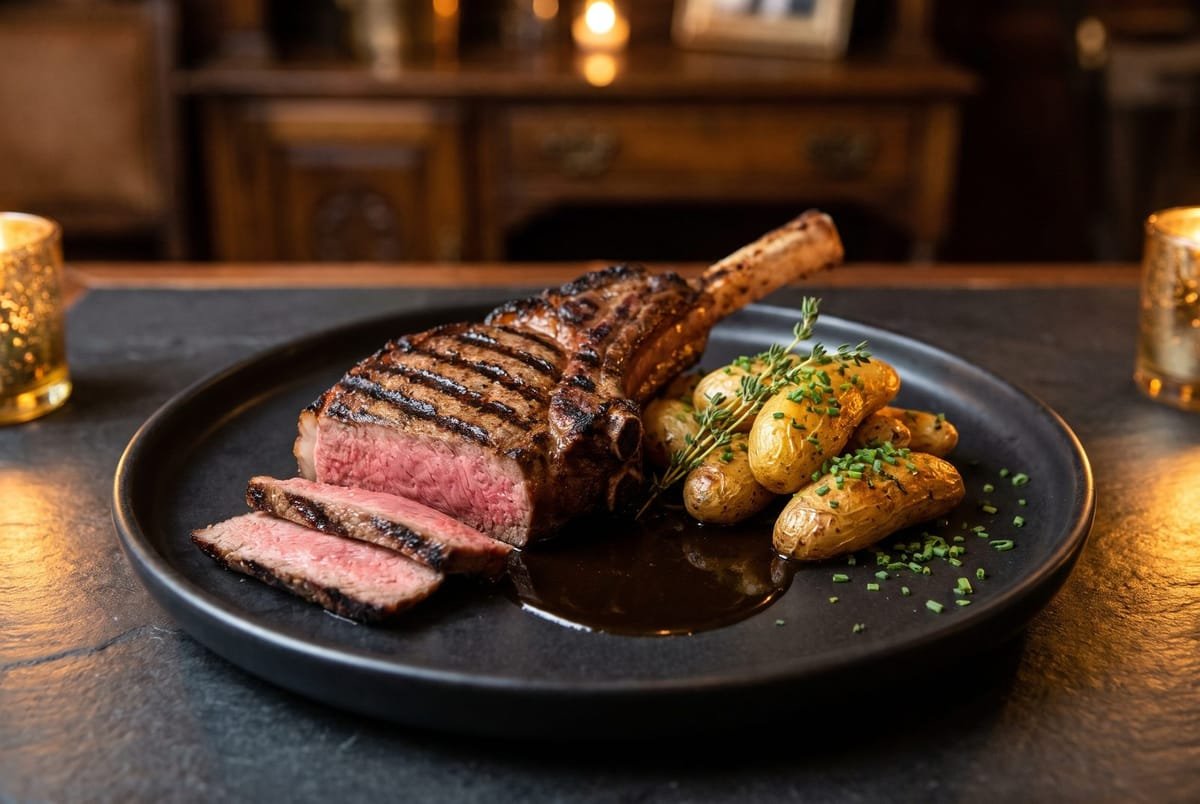
The charcoal-grilled elk chop at KITA, Pendry Park City. Image: Darren Eastman / 5 Stars Utah
For a while I ran most of my Facebook promotion as single videos. They look nice, but a single video asks people to sit through one idea. Lately I’ve moved most of my ads and boosted posts to carousels built from real stories, and it’s become one of my favorite techniques.
Here’s how I put one together.
One story per card
Every card is one real, named thing: a restaurant, a project, a dish. For 5 Stars Utah that might be a card for the charcoal-grilled elk chop at KITA in Park City, another for dinner by snowshoe at the Yurt at Solitude, and another for the four-course dinner at Alta’s Rustler Lodge. For my construction news it’s one named local project per card. People scroll sideways because each card is a new reason to keep going.
The photo does the first job
I pick the photo that tells you what the story is in half a second. Warm light, a clear subject, nothing cluttered. Food looks best close up with a little glow in the background. A job site looks best with the machine and the people in the frame.
Headlines that say the thing
The card headline is the name and the hook, nothing clever: “Elk chop at KITA, Pendry Park City.” If you have to think about what it means, it’s too clever for a thumb moving at full speed.
Every card links to its own story
This is the part people skip. Each card should open the exact story it shows, not a homepage. If someone taps the elk chop, they land on the elk chop. That’s the whole promise of the card.
Keep it fresh
I swap in the newest stories as they publish and pull anything that’s gone stale. If a card says “this week,” it had better be this week. Holiday cards come down when the holiday is over.
That’s it. Real stories, one per card, a strong photo, a plain headline and a straight link.